FINTECH

CBK licenses 29 more digital lenders, taking the total to 281
By August the licensed providers had written 9.6 million loans worth KSh165.1 billion — an average of roughly KSh17,200 a loan. The regulator has handled over 900 applications since digital lenders came under its supervision in March 2022, licensing 25 in July and 29 now, after reviewing business models, consumer protections and the fitness of shareholders and managers. The sector exists in its current form because of complaints about aggressive collection, opaque pricing and careless handling of customer data, which is worth remembering when reading the count as progress: a licence standardises who may lend, not what they charge or whom they will lend to.
Techweez
POLICY

The float in your wallet could start earning — for someone
The National Payment System Bill 2026 would let mobile money providers invest the customer funds they hold in trust, in government securities or interest-bearing accounts, while keeping reserves sufficient to cover balances. This is not fractional-reserve banking: the trust must keep backing the balances and cannot fund the provider's ordinary business. The open question is who gets the income. As drafted it may go to "public charitable purposes" rather than back to users, and former CBK governor Patrick Njoroge has proposed distributing the surplus to wallet holders as bonuses — a proposal not adopted. The arithmetic is why it matters: M-PESA moved KSh41.7 trillion in the year to March 2026, and a modest return on a float that large is not a modest number.
Techweez · TechTrends KE
FINTECH

Kenyans will be able to buy Dangote — as a depositary receipt on the NSE
Renaissance Capital Kenya is aggregating local applications while its Nigerian arm submits the combined order into the refinery's IPO; Stanbic holds the underlying Nigerian shares in custody and GDRs are then issued for NSE trading through CDSC, settled in shillings. Investors apply through licensed local brokers who handle KYC. The Nigerian offer is 4.1 billion shares at ₦525 with a ten-share minimum — about Sh490, which is an indicative equivalent rather than a promised NSE price. The Kenyan offer period is 5–13 October against the Nigerian close on 13 October, with allotment targeted for 11 November and NSE trading from 8 December, subject to approval. The app-based retail IPO we wrote about last month reaches Nairobi through a rather more traditional pipe.
TechTrends KE
TELCOS
2G and 3G are emptying out on their own
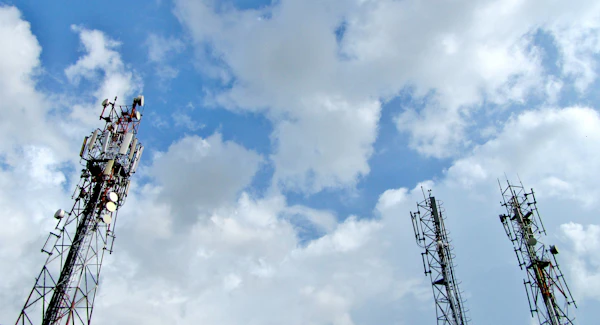
Nobody has mandated a shutdown, but the migration is happening: 2G subscriptions fell 27.3% to 9.3 million by June and 3G fell 39.2% to 4.5 million, against 48.3 million on 4G and 2.1 million on 5G, with 4G now 85.5% of mobile data subscriptions. The CA would set any retirement date, weighing network readiness, spectrum, consumer migration and specialised connected devices, while the GSMA and the Partnership for Digital Access in Africa aim at a billion Africans on broadband by 2030. The constraint is in the handsets, not the masts: smartphones are 65.6% of connected devices and 27.42 million feature phones remain, so a switch-off is an affordability question before it is an engineering one.
TechTrends KE
FUNDING
Seven women-led startups share KES 9 million out of Strathmore
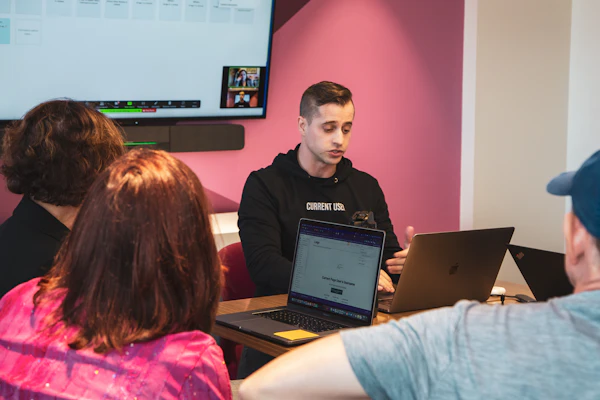
The Women in Tech Kenya Accelerator — Standard Chartered Foundation with Village Capital and iBizAfrica, run at Strathmore — put roughly KES 1.29 million each into seven companies after a twelve-week programme: Premac Care, connecting families to maternal, newborn and elderly care; ChipuRobo, teaching AI and robotics through locally made kits; FishBox Africa and Trident Analytics, both on aquaculture monitoring and smart feeding; Uptyke Consulting, building AI learning tools for students with disabilities; Nakuru Tubers, linking smallholders to inputs; and Seta Farm, growing mushrooms from organic waste. The programme has backed 107 women-led startups and distributed over KES 51.5 million since 2017.
TechTrends KE
